7 RT-qPCR Reporting Fixes for 2026 After the Latest Clinical Chemistry Wake-Up Call
Your amplification plot can look clean and still fail peer review. In 2026, the bigger risk is not only bad data. It is missing setup evidence. If your team cannot reconstruct efficiency, dilution logic, or reference-gene choices fast, your run is already fragile.
3 SEO Title Options You Can Test
- 7 RT-qPCR Reporting Mistakes Reviewers Still Catch in 2026
- 2026 RT-qPCR Checklist: 9 Fixes for MIQE 2.0-Ready Reporting
- Latest RT-qPCR Review Alert: 5 Reporting Gaps That Quietly Kill Trust
Why This Topic Is Suddenly Hot Again
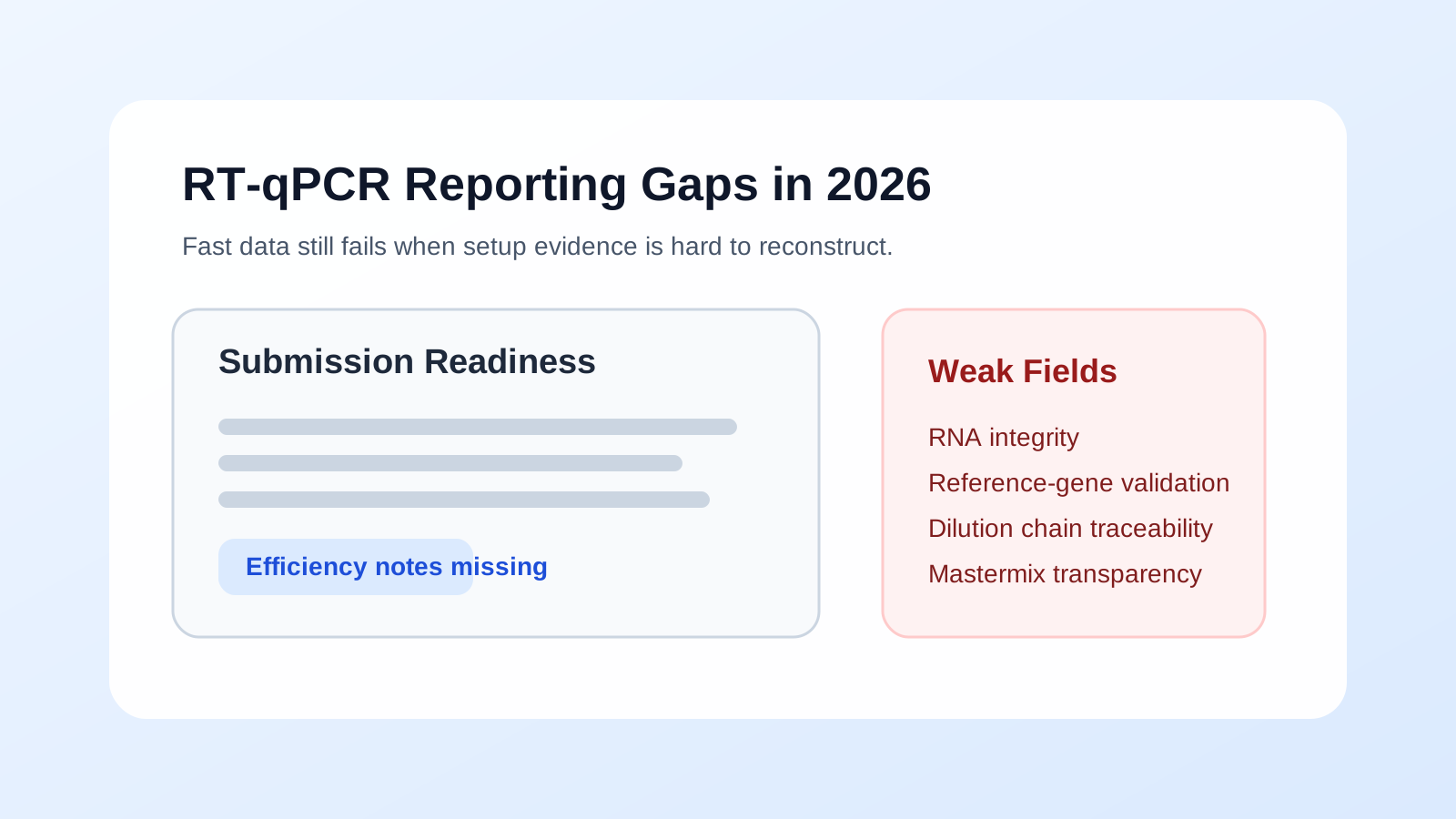
On January 28, 2026, Clinical Chemistry published a review of 461 RT-qPCR studies from 2019 to 2024. The numbers were uncomfortable: RNA integrity was reported in only 11% of papers, reference-gene validation in 5%, and PCR efficiency in about 1%.
That matters even more after the revised MIQE guidelines were published on April 24, 2025. The standard is moving up. Many lab habits are not.
3 Personal Experiences That Changed How I Document RT-qPCR
1) The Plate That Looked Fine Until a Reviewer Asked One Question
I once helped review a translational assay package that had strong amplification curves and tidy replicate spread. Then the reviewer asked for the efficiency method and the exact dilution path. The team had both steps in practice, but not in a format anyone else could reconstruct quickly.
We rebuilt the run notes around one dilution map and one locked setup sheet. The science did not change. The confidence did.
2) The "Stable" Reference Gene That Was Never Really Challenged
In another project, the reference gene had been inherited from an older protocol. Nobody had rechecked it after sample type and extraction chemistry changed. Expression drift looked like biology for two weeks before we traced it back to lazy validation.
That experience changed my rule. If the sample context changes, the reference-gene conversation starts over.
3) The Real Story That Quietly Fixed a Core Facility Workflow
Late in 2025, a core facility manager told me their biggest RT-qPCR problem was not instrument uptime. It was that every operator documented setup in a different style. We moved them to one pre-run checklist, one dilution visual, and one mastermix calculation path.
The next month, troubleshooting meetings got shorter because the records stopped fighting the data.
Pro Tip: If you cannot rebuild the standard curve and dilution chain from one page of notes, your reporting system is too weak for busy weeks.
The Practical Gaps Behind the Review Numbers
The 2026 review did not say most labs are careless. It showed that fast-moving teams often prioritize output over reconstructability. That is exactly where simple tools matter.
| Reporting Gap | What Usually Goes Wrong | Fix You Can Apply This Week | Tool Hub Shortcut |
|---|---|---|---|
| PCR efficiency not reported | Standard curve or slope notes live in scattered files | Save one run sheet with dilution series and efficiency result together | Serial Dilution Visualizer |
| Reference gene validation skipped | Older housekeeping genes are reused by habit | Recheck candidate genes when sample matrix changes | qPCR reproducibility playbook |
| RNA integrity missing | Quality checks are done but not logged in the same workflow | Add integrity field before plate setup begins | Reuse this checklist table |
| Mastermix math not transparent | Operators edit separate spreadsheets | Lock one shared volume template with N+1 logic | PCR Mastermix Calculator |
| Dilution chain is hard to audit | Tube transfers are written in shorthand or memory | Use one visual dilution map and keep it with the run file | PCR setup guide |
My 7-Step RT-qPCR Reporting Fix Workflow
- Define the exact biological question before choosing reference genes.
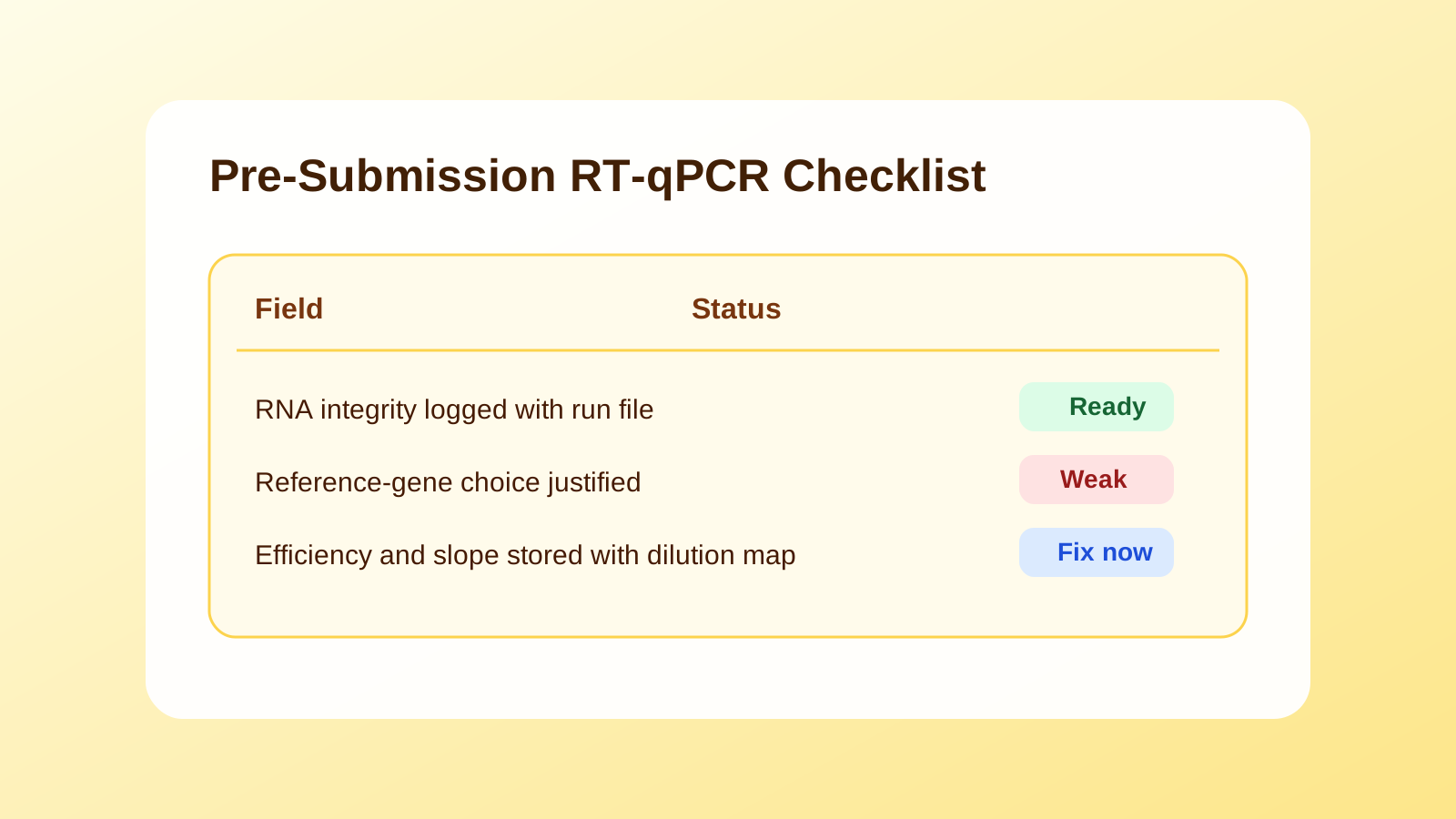
- Log RNA quality before the first well is planned.
- Build the dilution chain in one visual format the whole team uses.
- Capture efficiency and slope next to the standard-curve setup, not in a separate slide.
- Lock one mastermix calculation rule for all operators.
- Record one changed variable per rerun so diagnosis stays clean.
- Audit the final notes against MIQE 2.0 before the manuscript or report draft starts.
The fastest version of this system is boring on purpose. It uses fewer files, fewer operator-specific shortcuts, and more repeatable defaults. That is why I now pair the PCR Mastermix Calculator with the Serial Dilution Visualizer on the same run day.
Pro Tip: A beautiful amplification plot does not rescue weak metadata. Reviewers trust workflows they can retrace, not workflows that merely look calm.
What I Would Tighten First If I Inherited Your Workflow Today
I would not start with new chemistry. I would start with documentation that removes ambiguity.
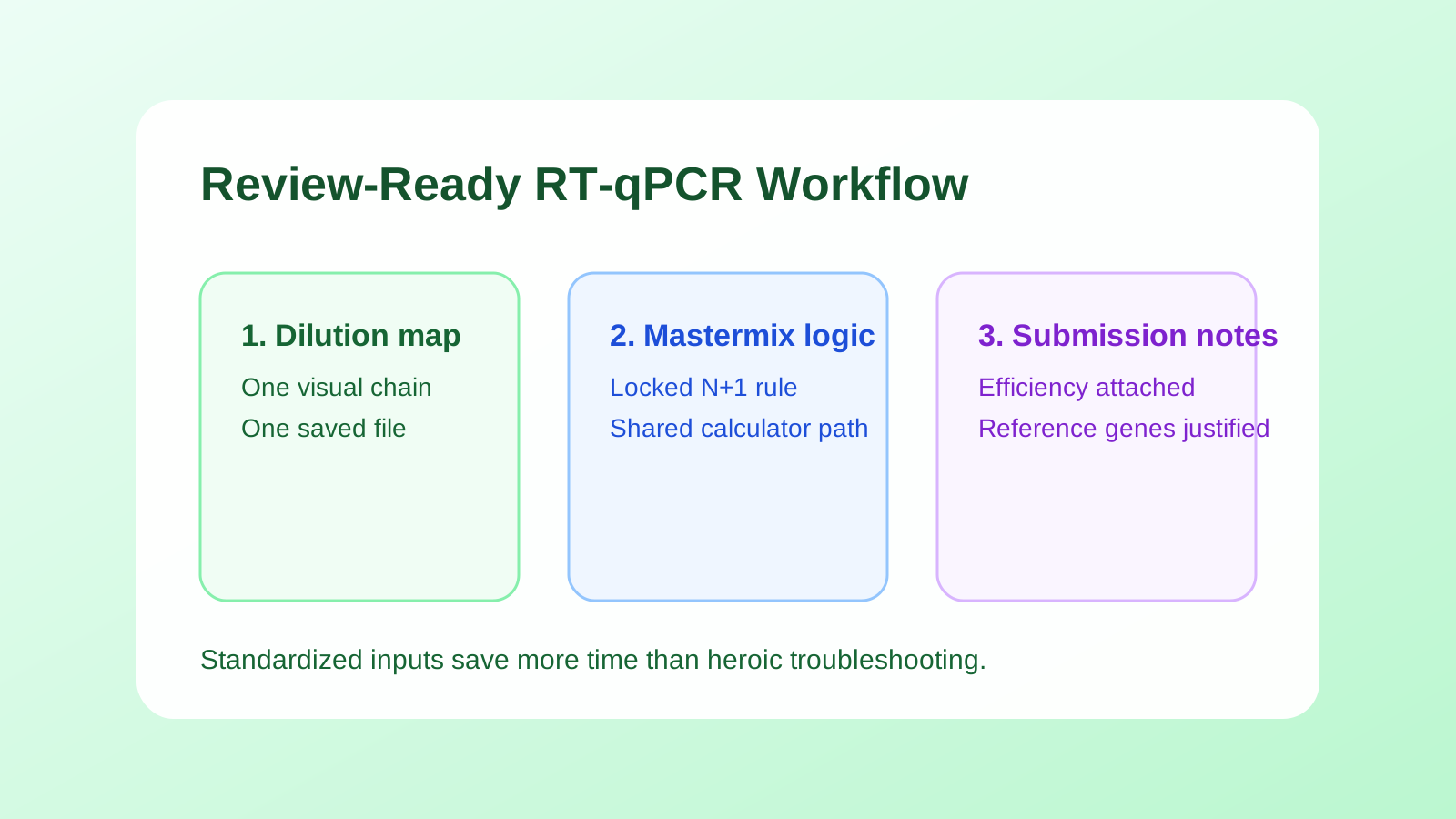
First, I would force every operator to use one dilution map. Second, I would standardize mastermix math so the last wells never rely on guesswork. Third, I would make reference-gene justification visible before analysis begins.
That is also where Tool Hub fits naturally. The site is strongest when it removes tiny setup decisions that later become expensive reporting holes.
In February 2026, NIST released RM 8043 to help forensic labs benchmark complex mixed-source DNA analysis. Different field, same lesson: standardized inputs beat memory when the stakes rise.
Standardize RT-qPCR Setup Before the Next Review Cycle
Use the Serial Dilution Visualizer for a clean standard-curve map, then lock your reaction math with the PCR Mastermix Calculator.
If your team keeps losing time on missing RT-qPCR details, open the tool workflow above and test it on the next plate. If one reporting gap keeps returning, post it in the comments and I can suggest the first control to tighten.
References
- Bustin S. A. et al. Reporting practices of RT-qPCR assays and standard curves in high-impact-factor journals are deteriorating. Clinical Chemistry, January 28, 2026: https://academic.oup.com/clinchem/advance-article/doi/10.1093/clinchem/hvaf176/7999305
- Dominguez P. L. et al. The revised MIQE guidelines for publication of quantitative real-time PCR experiments. Clinical Chemistry, April 24, 2025: https://academic.oup.com/clinchem/article/71/6/918/8117239
- NIST. NIST Releases New Standard To Help Forensic Labs Analyze Complex DNA Evidence, February 17, 2026: https://www.nist.gov/news-events/news/2026/02/nist-releases-new-standard-help-forensic-labs-analyze-complex-dna-evidence