7-Step qPCR Reproducibility Playbook for 2026 (MIQE 2.0 Ready)
Your qPCR run can look clean and still fail decision-making.
One hidden setup error can force a full rerun, burn expensive reagents, and delay your timeline by days.
If your Cq spread is unstable, this guide is for you.
3 SEO Title Options You Can Test
- 7 qPCR Mistakes That Quietly Kill Reproducibility (And How to Fix Them Fast)
- 2026 qPCR Playbook: 9 Checks to Cut Reruns and Save Reagents
- MIQE 2.0 in Practice: 11 Actions for Cleaner qPCR Data This Week
Why This Topic Is Hot in 2026
The new MIQE 2.0 update was published on April 24, 2025.
It tightened expectations for qPCR transparency, reporting quality, and reproducibility.
WHO also opened a new diagnostics guideline process in October 2025 for molecular methods and sequencing standards.
That is a clear signal: documentation quality is becoming part of technical quality.
3 Personal Experiences from Real Projects
1) The "Last Tube Is Short" Trap
I once watched a team lose a 96-well afternoon because their mastermix was prepared for exact sample count.
By well 89, volume drift appeared and the final wells were underfilled.
We switched them to an automatic buffer rule with the PCR Mastermix Calculator.
Reruns dropped in the next week because dead volume was no longer guessed.
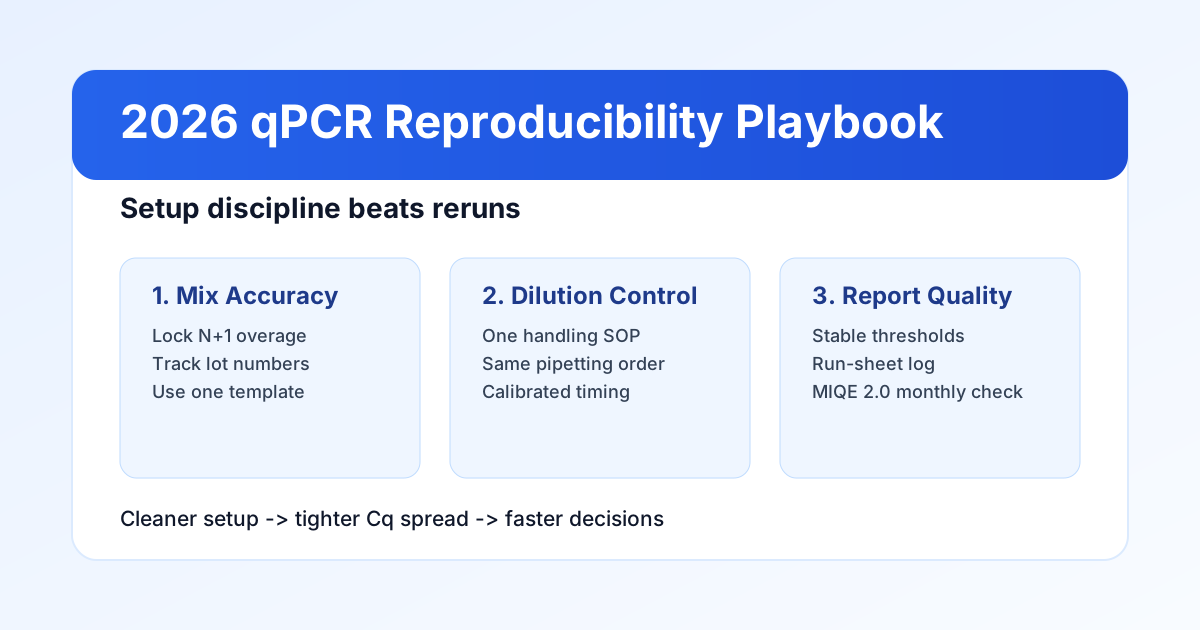
Pro Tip: If pipetting is manual, never prepare exactly N reactions.
Use N + 1 or 10% overage, then log the rule in your SOP.
2) The "Looks Fine" Primer Pair That Was Not Fine
In another project, melt curves looked acceptable, but replicate spread stayed wide.
The root issue was not machine drift; it was inconsistent dilution handling before setup.
We standardized dilution prep with a visual protocol and used the Serial Dilution Visualizer.
Operator-to-operator spread narrowed within two runs.
Pro Tip: If three people prepare dilutions in three styles, your qPCR noise starts before cycling.
Standardize handling first, then optimize temperatures.
3) Reporting Discipline Fixed Performance Discipline
One startup team asked for "better amplification efficiency," but their main gap was record quality.
Template source, lot numbers, and threshold settings were scattered across chats.
We created one checklist and linked their setup SOP to this guide: How to Calculate PCR Mastermix Volumes Accurately.
Once reporting got cleaner, troubleshooting became faster and less emotional.
7-Step Workflow You Can Apply Today
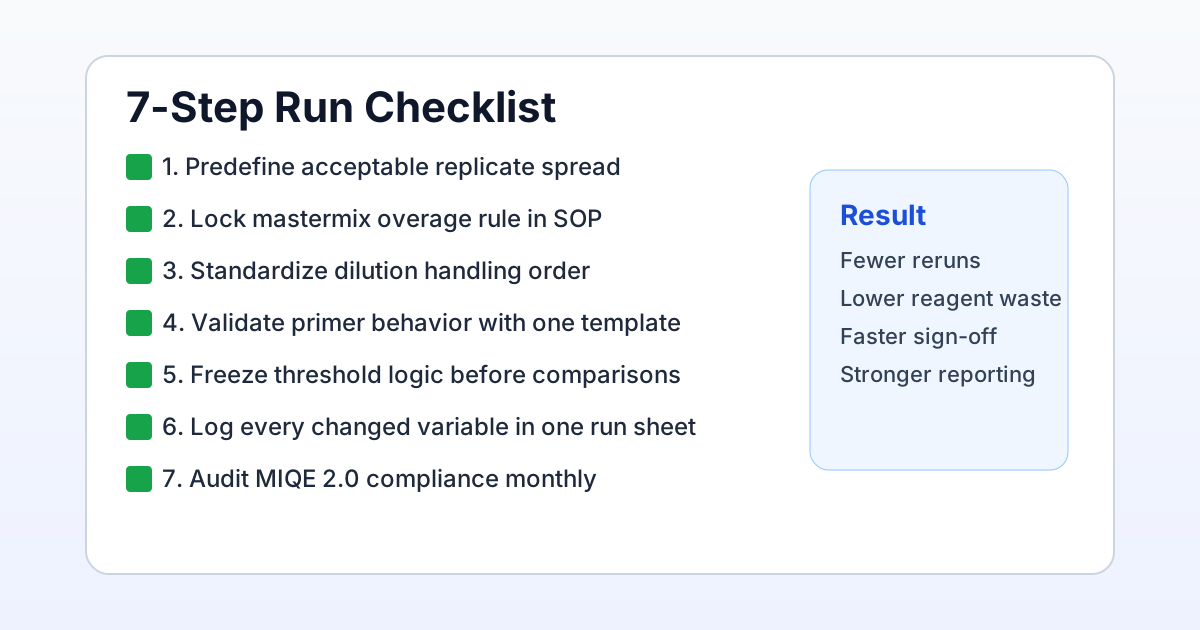
- Define one acceptance rule for replicate spread before each run.
- Use one mastermix formula and lock an overage rule.
- Normalize dilution steps with one visual protocol.
- Validate primer behavior with a fixed review template.
- Freeze threshold logic before comparing groups.
- Log every changed variable in a single run sheet.
- Audit against MIQE 2.0 once per month, not only before publication.
Quick Diagnostic Table (Snippet-Friendly)
| Symptom | Likely Cause | Fix Today | Tool Hub Shortcut |
|---|---|---|---|
| Last wells are weak | No overage in mastermix | Apply N + 1 or 10% buffer | PCR Mastermix Calculator |
| Replicates drift by operator | Inconsistent dilution style | Use one dilution SOP | Serial Dilution Visualizer |
| Good controls, bad sample consistency | Variable setup order | Freeze pipetting sequence | PCR setup guide |
| Too much debate after run | Missing run metadata | Enforce one checklist | Reuse this 7-step workflow |
A Reliable Story Worth Copying
In February 2026, NIST released RM 8043 to help forensic labs benchmark complex mixed-source DNA analysis.
The lesson is broader than forensics: when stakes are high, reference standards beat intuition.
If your team still depends on memory and personal style, your variance will stay high.
Standardized inputs are not bureaucracy; they are speed insurance.
Best Next Move
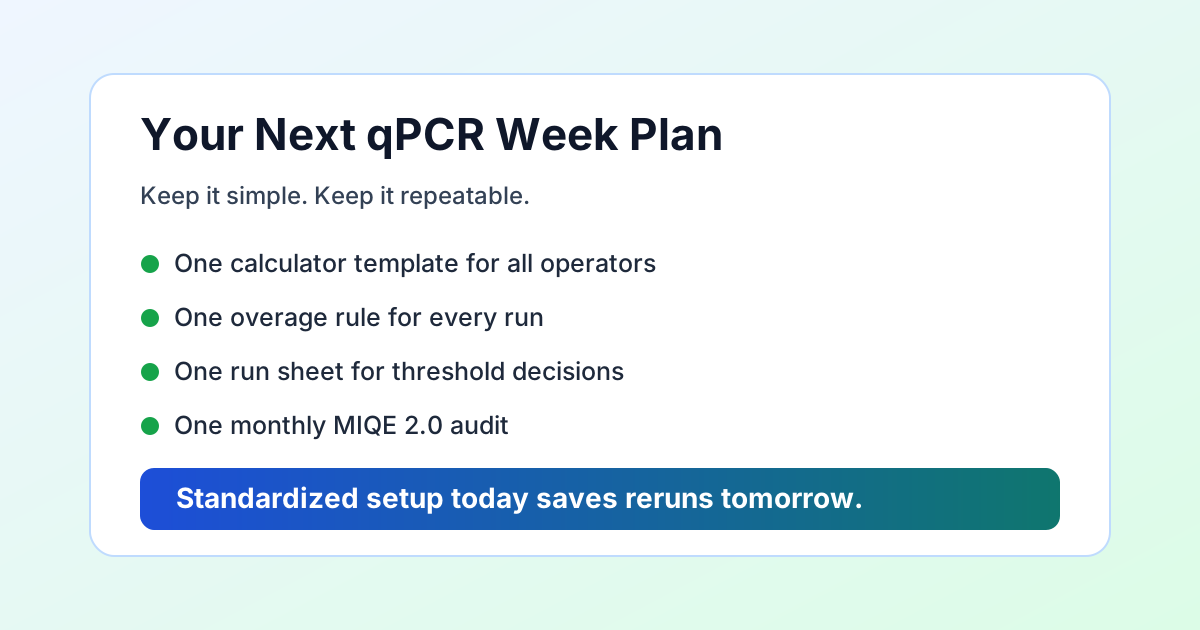
If you want the fastest improvement this week, start with setup math and handling consistency.
Use one template, one overage rule, and one calculator flow across the team.
Stop Losing qPCR Runs to Preventable Setup Errors
Use the PCR Mastermix Calculator to standardize volumes, apply a safe overage, and reduce reruns immediately.
Have a recurring qPCR failure pattern in your lab?
Comment with your workflow bottleneck, and I can map it to a faster troubleshooting path.
References
- MIQE 2.0 (Clinical Chemistry, April 24, 2025): https://academic.oup.com/clinchem/article/71/6/918/8117239
- WHO diagnostics guideline process update (October 20, 2025): https://www.who.int/news-room/articles-detail/guidelines-in-development--guidance-on-development-of-high-quality-evidence-informed-guidelines-for-molecular-diagnostics-and-genomic-sequencing-methods
- NIST RM 8043 announcement (February 17, 2026): https://www.nist.gov/news-events/news/2026/02/nist-releases-new-standard-help-forensic-labs-analyze-complex-dna-evidence