9 qPCR Standard Curve Fixes for 2026: From Dilution Drift to Decision-Ready Data
A beautiful amplification plot can still hide bad quantification. When standard-curve prep drifts, your Cq values look precise but decisions go wrong. If your team keeps rerunning plates, this is usually a setup and workflow problem, not a machine problem.
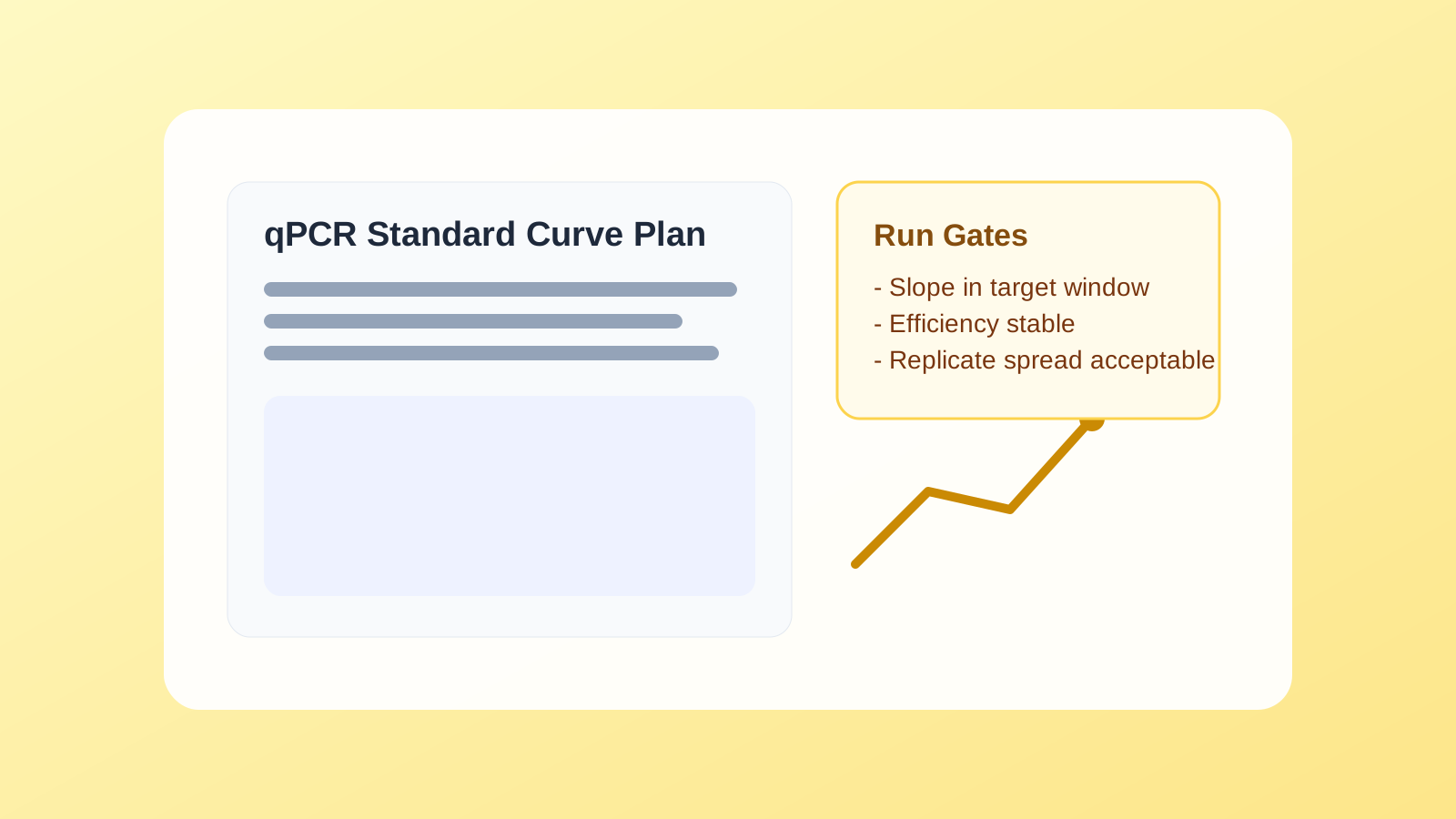
3 SEO Title Options You Can Test
- 9 qPCR Standard Curve Mistakes That Inflate Cq Variability in 2026
- 2026 qPCR Quantification Guide: 7 Fixes for Cleaner Standard Curves
- qPCR Standard Curve Playbook: 11 Actions to Cut Reruns This Month
Why This Topic Is Hot Right Now
MIQE 2.0 was published in Clinical Chemistry on April 24, 2025. It raised expectations for transparency and reproducibility in qPCR reporting.
WHO also opened a molecular diagnostics guideline process update on October 20, 2025. That signals stronger scrutiny for method quality and consistency in clinical workflows.
3 Personal Experiences from Real Bench Work
1) The Dilution Chain That Broke at Step Four
I once inherited a run where the first three standards were perfect and the rest drifted badly. The root cause was simple: one operator switched pipettes mid-series and changed handling style. We standardized dilution rhythm and recovered slope stability in the next run.
2) The "Good R2" Trap
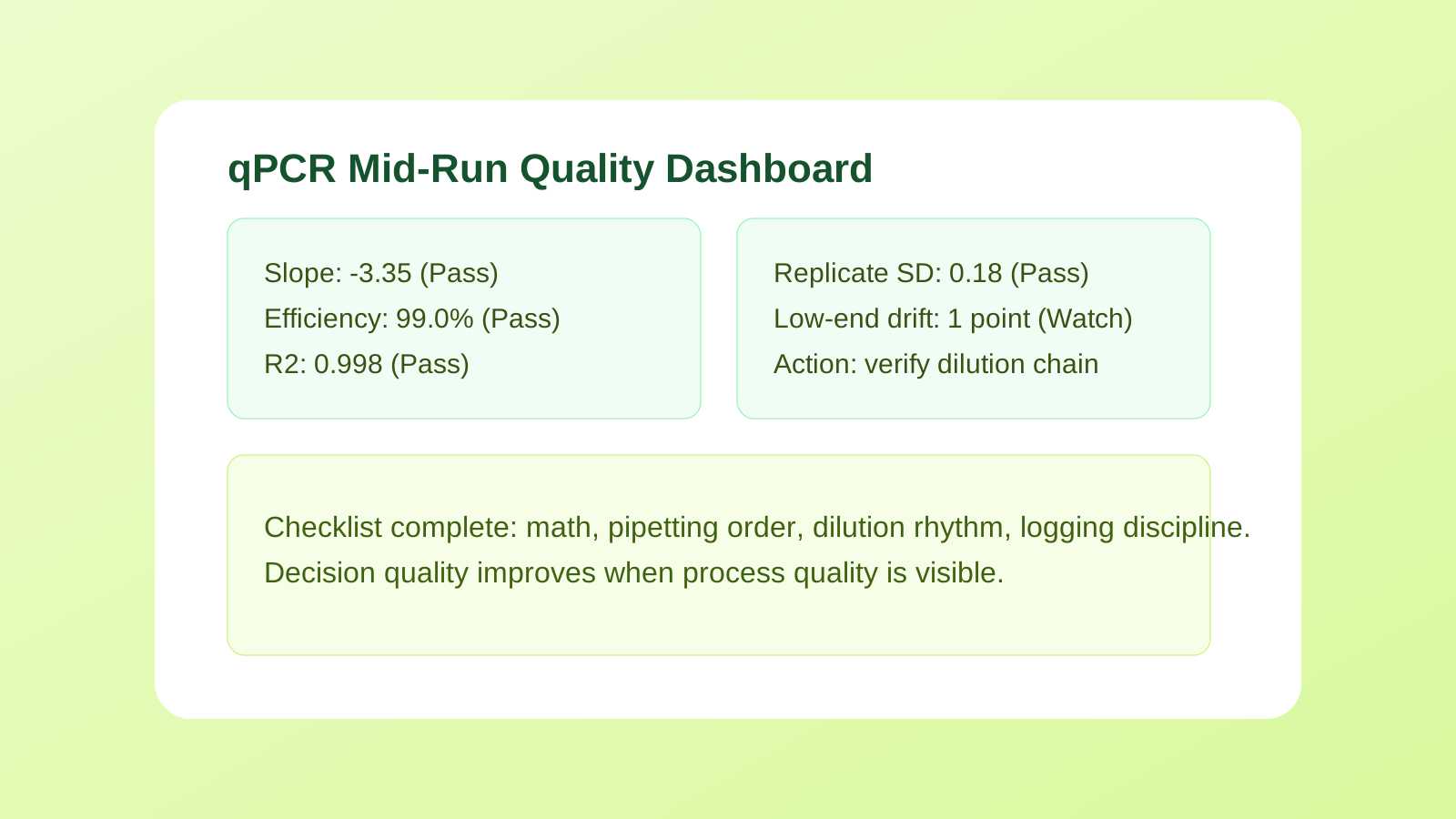
In another project, R2 looked acceptable, so everyone approved the run. Later we found poor replicate agreement around the lower concentration points. We added acceptance gates for replicate spread, not R2 alone.
3) The Story That Changed a Team Habit
A partner lab was losing two to three days each week to reruns. After one workshop, they locked one prep order, one overage rule, and one dilution SOP. Within two weeks, reruns dropped and reporting meetings became calmer.
Pro Tip: Never evaluate a standard curve with one metric. Check slope, efficiency window, replicate spread, and low-end point behavior together.
9-Fix Table You Can Apply Immediately
| Failure Signal | Likely Cause | Practical Fix | Tool Hub Shortcut |
|---|---|---|---|
| High replicate spread | Inconsistent pipetting rhythm | Standardize sequence and timing | PCR Mastermix Calculator |
| Lower points drift | Weak dilution discipline | Use one visual dilution SOP | Serial Dilution Visualizer |
| "Good" R2 but poor calls | Over-reliance on single metric | Add multi-metric acceptance gates | MIQE 2.0 playbook |
| Frequent reruns by shift | Operator-style variance | Freeze one setup script | PCR setup guide |
| Late-stage troubleshooting chaos | Missing run metadata | Log all changed variables | Reuse this 9-fix table |
A Compact Workflow for Better Decisions
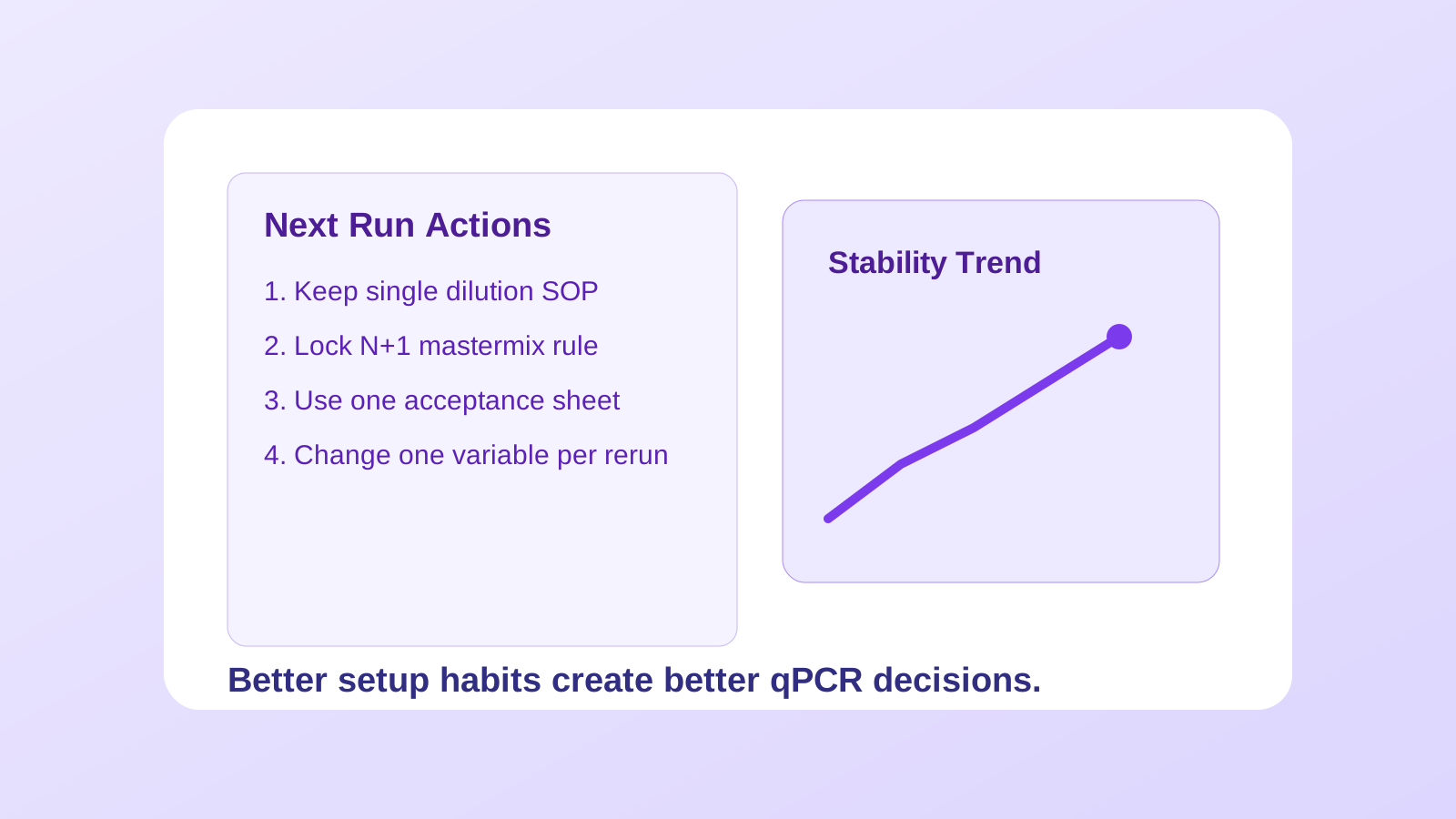
- Lock dilution plan before pipetting starts.
- Apply N+1 mastermix logic every run.
- Freeze setup order across all operators.
- Review curve quality with multiple metrics.
- Track every changed variable in one sheet.
- Escalate only one major variable per rerun.
Pro Tip: If your rerun changes three variables at once, you gain output but lose diagnosis.
Build Repeatable qPCR Setup in Minutes
Use Tool Hub calculators to standardize mastermix and dilution steps so your standard curves are decision-ready, not rerun-prone.
If you have a recurring standard-curve failure, share your bottleneck in the comments and I can map a tighter troubleshooting path.
References
- MIQE 2.0 (Clinical Chemistry, April 24, 2025): https://academic.oup.com/clinchem/article/71/6/918/8117239
- WHO molecular diagnostics guideline process update (October 20, 2025): https://www.who.int/news-room/articles-detail/guidelines-in-development--guidance-on-development-of-high-quality-evidence-informed-guidelines-for-molecular-diagnostics-and-genomic-sequencing-methods