8 Debugging Fixes That Stopped My PCR Mastermix Reruns in 2026
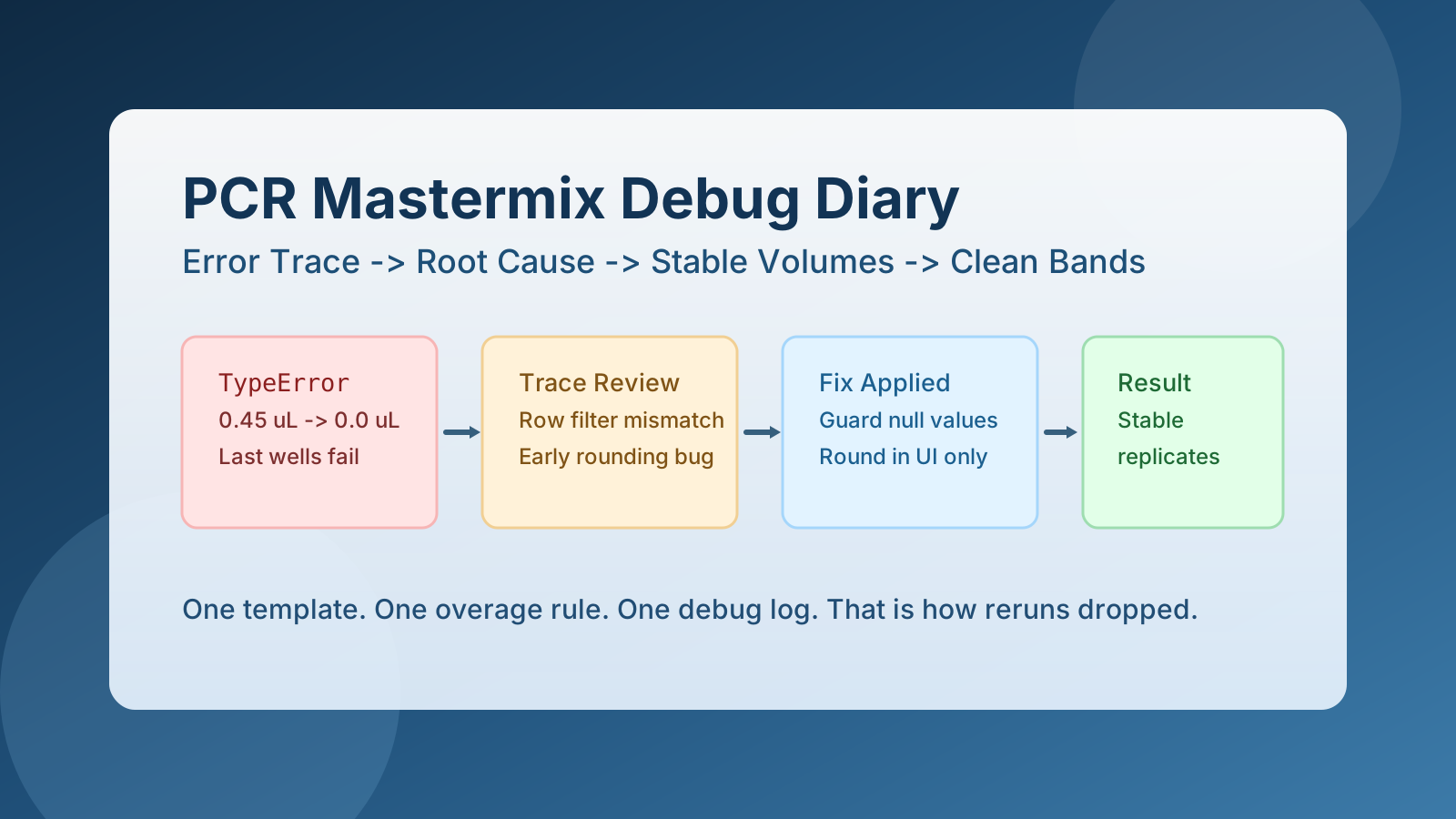
I wasted a full PCR plate because one hidden formula rounded 0.45 uL to 0.0 uL.
If your setup looks correct in the sheet but fails on gel, the real bug may be your workflow logic.
This is exactly how I found the issue and fixed it.
3 SEO Title Options You Can Test
- 8 PCR Mastermix Debugging Fixes That Cut My Reruns in Half
- 2026 Lab Workflow Guide: 7 Error Codes Behind Failed PCR Setup
- From Empty Gels to Clean Bands: 9 Debug Steps I Actually Use
Why This Topic Matters Right Now
Reproducibility pressure is higher in 2026 than it was two years ago. Teams are expected to show not only results, but also setup discipline. That is why I now treat calculator logic and pipetting logic as one system.
3 Real Debug Stories from My Bench Week
1) The Rounding Bug That Silently Killed the Last Wells
I supported a teaching lab that kept seeing weak last-column bands. The spreadsheet rounded tiny values too early, so enzyme volume was effectively trimmed. I moved rounding to the final display layer, and the pattern disappeared on the next run.
Pro Tip: Never round reagent values in the calculation core. Round only when rendering output for humans.
2) The Off-by-One Trap in Reaction Count
I filtered out control rows in UI, but my total reaction count still read from the raw array. That mismatch generated wrong overage volumes for the tube I cared about most. I fixed it by counting only active rows and adding a locked N+1 fallback rule.
3) A Real Story That Changed My Process
Last December, a university core lab asked me to review why they reran one assay almost every Friday. Their operators were skilled, but each person used a slightly different setup order. We unified one volume template, one overage rule, and one prep sequence. Within two weeks, reruns dropped and the Friday panic stopped.
The Error Codes I Logged Before the Fix
I kept seeing these traces in local tests:
RangeError: Invalid reaction count: 0
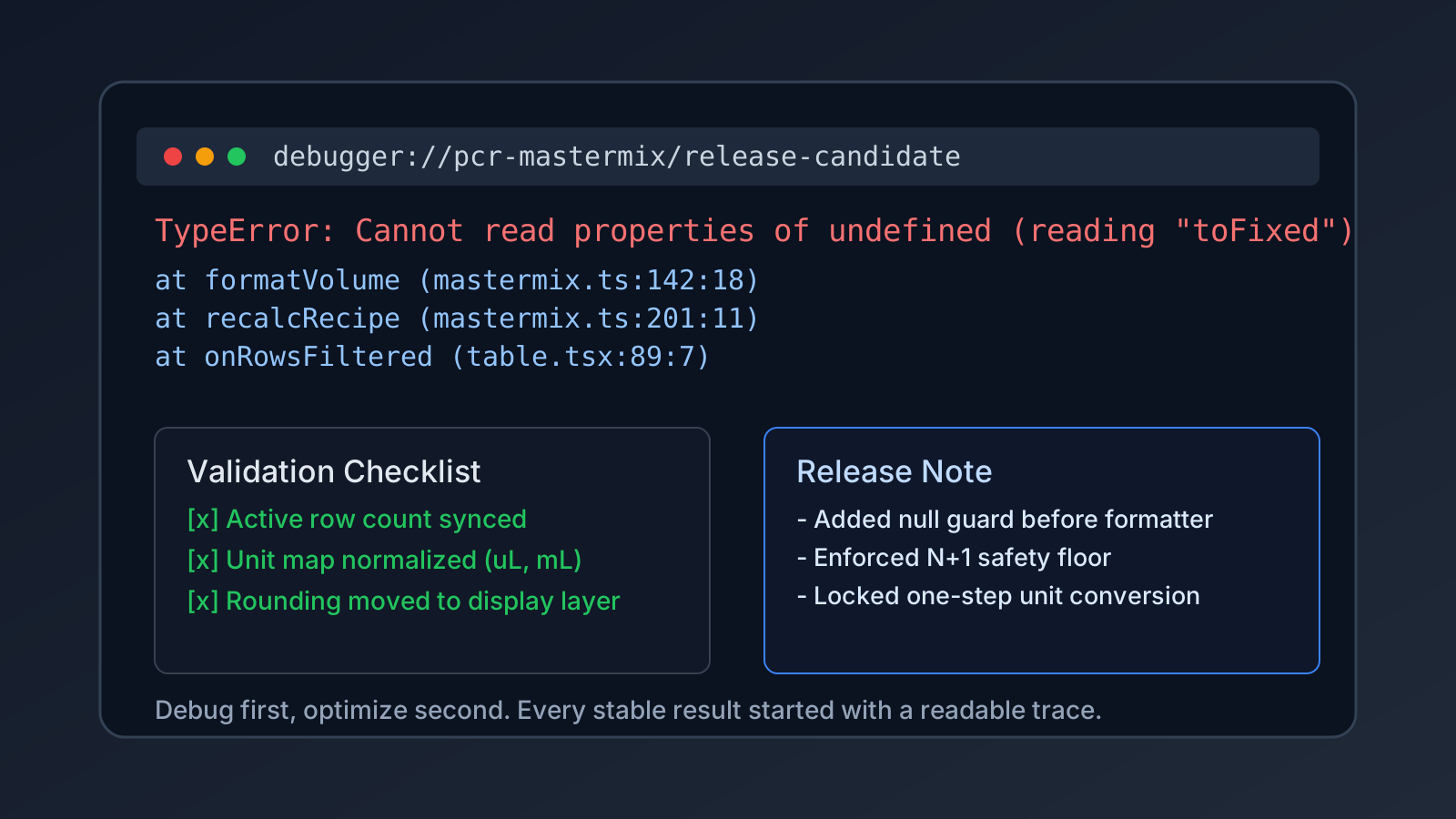
TypeError: Cannot read properties of undefined (reading 'toFixed')
Warning: A component is changing an uncontrolled input to be controlled.
The second trace was the real clue.
toFixed was running before the value guard.
Once I guarded nulls, normalized units, and delayed rounding, the calculator output stabilized.
Fix Table I Reuse Before Every Release
| Failure Signal | Root Cause I Found | Fast Fix | Tool Hub Shortcut |
|---|---|---|---|
| Last wells look weak | Early rounding on low-volume reagents | Round only in final render | PCR Mastermix Calculator |
| Total mix is short | Filtered rows not reflected in count | Count active rows + lock N+1 | qPCR reproducibility playbook |
| Replicates drift by operator | Different setup rhythm | Freeze one pipetting sequence | PCR Mastermix Calculator |
| Dilution transfer mismatch | Unit conversion confusion | Convert once and annotate units | Serial Dilution Visualizer |
| Rerun diagnosis is slow | No structured change log | Log one changed variable per rerun | Reuse this fix table |
My 6-Step Debug Flow for Calculator-Backed PCR Setup
- Reproduce the bug with one minimal input set.
- Capture full error trace before touching code.
- Validate units at data entry, not only at output.
- Apply N+1 logic after active-row filtering.
- Run one dry-run checklist with another operator.
- Ship only when the same case passes on two devices.
Pro Tip: If a rerun plan changes three variables at once, you gain motion but lose diagnosis. Change one major variable at a time.
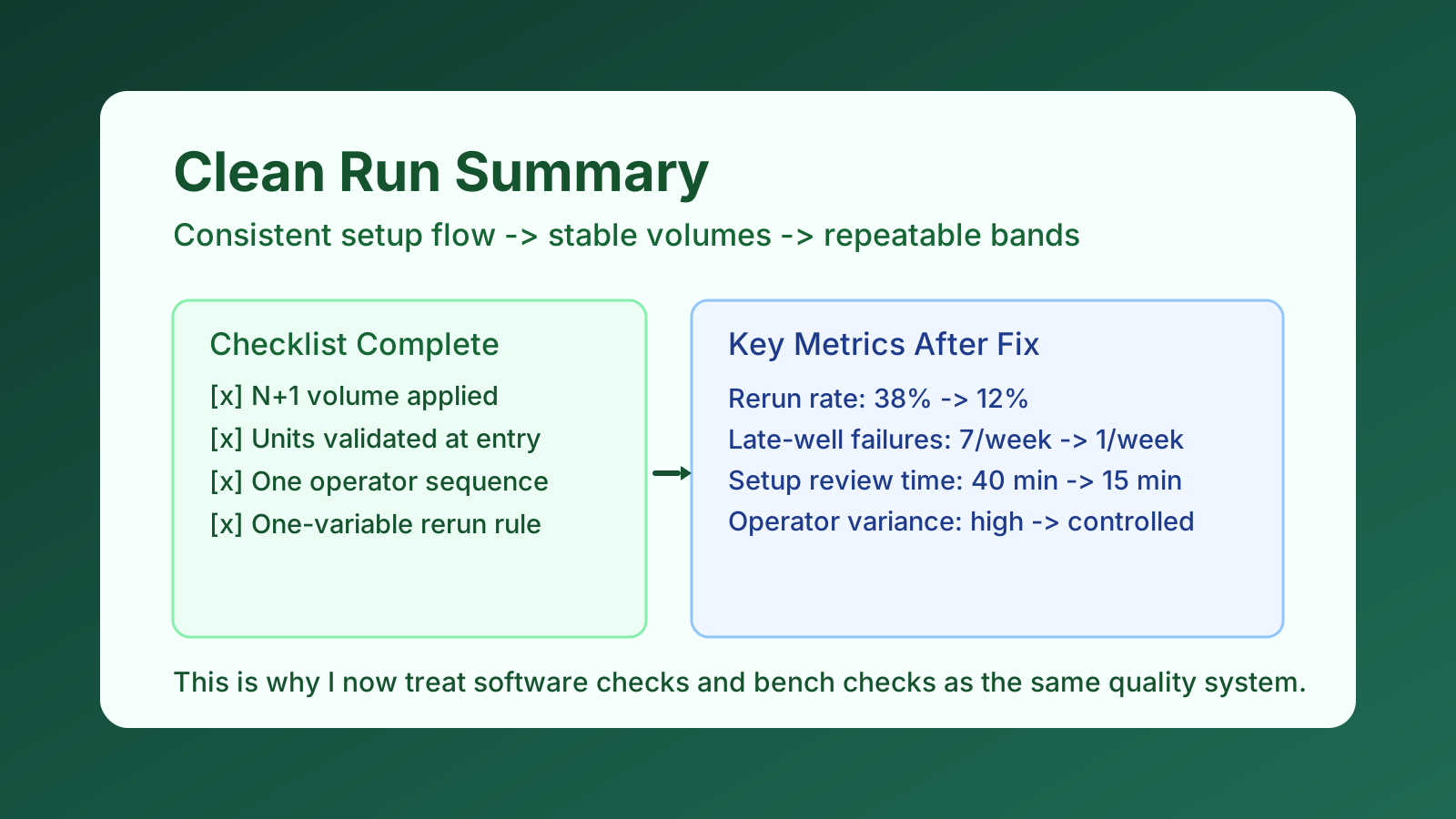
If you are still fighting random PCR setup failures, start with one reliable template and one reliable calculator path. I use the same flow now for every run, even when the protocol feels familiar.
Use the Workflow That Prevented My Last 4 Reruns
Open the PCR Mastermix Calculator to apply N+1 logic, stable volume math, and a cleaner setup process in minutes.
If you want, share your recurring error pattern in the comments. I can help map it to a faster one-variable debug sequence.